|
|
|
|
|
| Click a Thumbnail to read the component. Hold down Ctrl while
clicking to expand the image |
Exec - Executive Briefing - Why Should I Care
https://www.pragmatic365.org/display-show.asp?Showname=MB-EXEC&ComponentNo=000818
What aspects of the proposed change could reduce people's sense of predictability or control, and what could we do to make the purpose, journey, consequences and opportunities for influence clearer?
What additional mental effort, learning or workload will the change require, and what existing work, complexity or competing demands could we remove to create sufficient capacity for adoption?
What might different people or groups believe they will lose—including familiar ways of working, autonomy, expertise, influence, status, relationships or security—and which of these losses are real rather than merely perceived?
Whose identity, competence, confidence or professional value might be threatened by the change, and how could we recognise existing expertise while enabling people to become confident and competent in the target state?
How might the change affect people's relationships, belonging, influence, status or place within the enterprise, and what should we do to preserve valuable connections and create new ones?
https://www.pragmatic365.org/display-show.asp?Showname=MB-EXEC&ComponentNo=000818
FREE EA Training at www.PEAF.com/Training
FREE EA Books at www.PEAF.com/Books
#PEAF #PragmaticEA #EntArch #enterprisearchitecture #BizArch #Change #Innovation #BusinessModel #CEO #Strategy #TOGAF #ITgovernance #agileculture #agile #agileleadership #agilemethodology #itstrategy #ceos
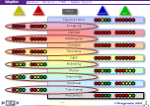
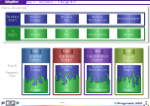
People do not resist change. They resist the threat that change represents to their safety, energy, value, identity and belonging
https://www.pragmatic365.org/display-show.asp?Showname=MB-EXEC&ComponentNo=000818
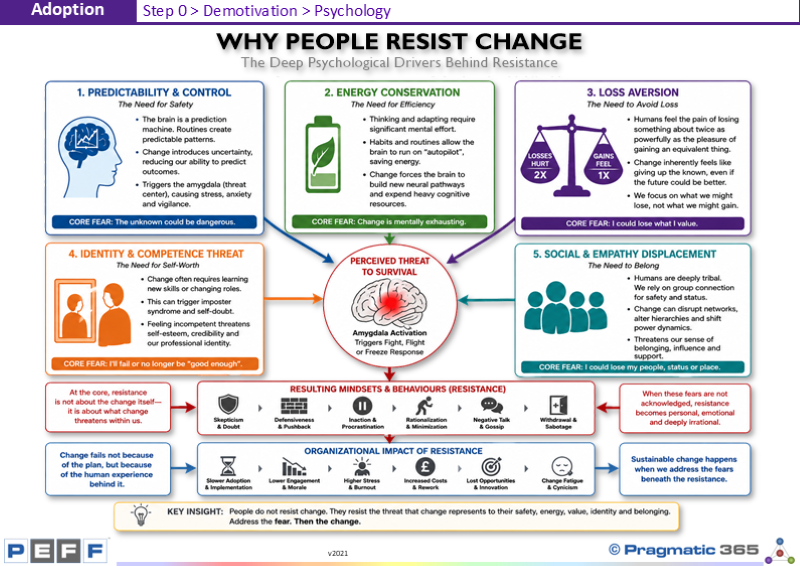
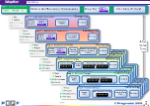
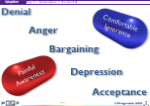
This model explains why people frequently resist change even
when the proposed change appears rational, beneficial or necessary. Its central
proposition is that people do not generally resist change simply because they
are stubborn, irrational or unwilling to improve. Instead, they resist the
perceived threats that change creates. These threats may relate to safety,
predictability, mental energy, loss, identity, competence, belonging, influence
or social status. ...to read more, please Login or Register |
Keypoint |
Adopt this component by... |
People do not resist change. They resist the threat that change represents to their safety, energy, value, identity and belonging
|
C-Suite: Create the organisational conditions in which change is psychologically credible, safe and worthwhile.
Management: Translate those conditions into the day-to-day human experience of change.
EA Project Team: Design and enable the transition through which people can understand, influence, learn, adopt and sustain the change.
|
Questions to ponder... |
What aspects of the proposed change could reduce people's sense of predictability or control, and what could we do to make the purpose, journey, consequences and opportunities for influence clearer? | What additional mental effort, learning or workload will the change require, and what existing work, complexity or competing demands could we remove to create sufficient capacity for adoption? | What might different people or groups believe they will lose—including familiar ways of working, autonomy, expertise, influence, status, relationships or security—and which of these losses are real rather than merely perceived? | Whose identity, competence, confidence or professional value might be threatened by the change, and how could we recognise existing expertise while enabling people to become confident and competent in the target state? | How might the change affect people's relationships, belonging, influence, status or place within the enterprise, and what should we do to preserve valuable connections and create new ones? |
|